This qualification reflects the role of highly skilled senior managers or department heads in hospitality organisations. They use a broad range of hospitality skills combined with specialised managerial skills and substantial knowledge of the industry to coordinate hospitality operations. They operate with significant autonomy and are responsible for making strategic business management decisions.
Hospitality managers may work in organisations such as restaurants, hotels, motels, clubs, pubs, cafes, and coffee shops, or they may run their own business.
To achieve this qualification, the individual must have completed a total of at least 200 hours of work in a hospitality environment, including management responsibilities, as detailed in the Assessment Requirements of the units of competency.
Qualification CRICOS Code: 114305B
Qualification Status: Current
AQF Level: 5
Mode of Delivery: Face to face
Total Core Units: 11
Total Electives Units: 17
Placement: NIL ( There is no WBT unit for this qualification )
Location of course: Level 1, 372 Spencer Street, West Melbourne, Vic 3003
Total Course Duration: 78 weeks (including term breaks)
Total Course Fee: AUD 40,000
Tuition Fee: AUD 36,000
Material Fee: AUD 3,800
Application Fee: AUD 200 (Non-refundable)

Entry Requirements
There are no specific entry requirements as per the qualification details or training package. International students entering this course at Unity Skills College of Hospitality must meet the following entry requirements:
Students must be a minimum age of 18 years or above at the time of course commencement.
Academic Requirements
To enter this qualification, applicants should have successfully completed the equivalent of Australian Year 12 or Certificate IV or higher.
English Language Requirements
1. Either a minimum IELTS test score of overall 6 with no band less than 5 or equivalent for direct entry, or an IELTS score of overall 5 or equivalent with an ELICOS (up to 20 weeks) to be taken prior to entry into the main VET course. Results older than 2 years are not acceptable.
OR
2. Evidence that, within two years of their application date, students have Successful Completion of AQF Certificate IV in Australia within two years from the start of study.
AND
3. All applicants are to demonstrate the required Literacy and Numeracy competence may undertake the Language Literacy, Numeracy and Digital (LLND) test to achieve a result of ACSF level 4 to meet Institute’s entry requirement.
Please Note:
Pre-training review
All international applicants will undertake pre-training review to determine suitability for the course and student needs. The aim of the review is to identify their training needs through questions on previous education or training, relevance of the course to applicant, and relevant experience. This pre-training review also aims to identify any support needs and possible RPL or credit transfer opportunities.
Hardware/Software requirements
Unity Skills College of Hospitality provides learners Office 365 account (free of charge) with access to online Outlook, Word, PowerPoint, Excel, OneDrive etc to facilitate the training and communication. Unity Skills College of Hospitality will provide access to computers/laptops during classroom hours. However, for students to work on assessments, tasks and self-study, all learners are expected to have access to a laptop or computer with Windows/macOS operating system at their own cost.
Note: Some assessment tasks are completed using a computer and internet, and it is essential for the student to possess basic computer skills.
Kitchen toolkit
Students will need access to a kitchen toolkit which includes a chef’s uniform, safety shoes, various knives and small equipment. This will be arranged and provided by Unity Skills College of Hospitality as part of the material fee.
Physical requirements
Applicants will need to be physically able to carry out manual handling required to perform tasks involved while undergoing training. As part of this course students are expected to handle complex foods – e.g. cooking of various processed or raw meats, poultry, seafood’s, dairy items and student must keep in mind of any religious or dietary barriers to handle such foods before enrolling in this course.
Unity Skills College of Hospitality will identify any such barriers presented by applicants during pre-training review and provide required support and reasonable adjustment where possible.
Pathways
When a learner has completed this course, they can then choose to progress with the following training pathways:
1. Advanced Diploma of Hospitality Management
2. Bachelor of Hospitality Management
Employment Pathways:
Job roles and responsibilities vary across various industry sectors. This qualification provides a pathway to work in any hospitality industry sector as a departmental or small business manager.
The diversity of employers includes restaurants, hotels, motels, catering operations, clubs, pubs, cafés, and coffee shops. This qualification allows for multiskilling and for acquiring targeted skills in accommodation services, cookery, food and beverage and gaming.
Course Structure:
A total of 28 Units (11 Core and 17 electives) must be completed and deemed competent to achieve the qualification Diploma of Hospitality Management. Participants who achieve competency in any unit/ s will receive a Statement of Attainment (provided USI is verified) for that unit/s without completing all 28 units in the qualification. Students completing all the required units of competency will attain full qualification.
The Performance Evidence in the units marked with a * include tasks which explicitly need to be assessed during the work placement. In order to be deemed competent in the unit of competency, the student must satisfactorily complete the workplace-based assessment. Should in case the workplace-based assessment is assessed as not-satisfactory, the student will not be able to achieve competency and the qualification cannot be issued. An estimate of 5 hours per unit is allocated for workplace assessment and is included in the work placement hours. Please refer to the individual assessment kit for further details. According to CHC implementation guide, the total number of hours may be applied collectively across all units of competency that include the requirement for workplace hours
Facilities and Resources
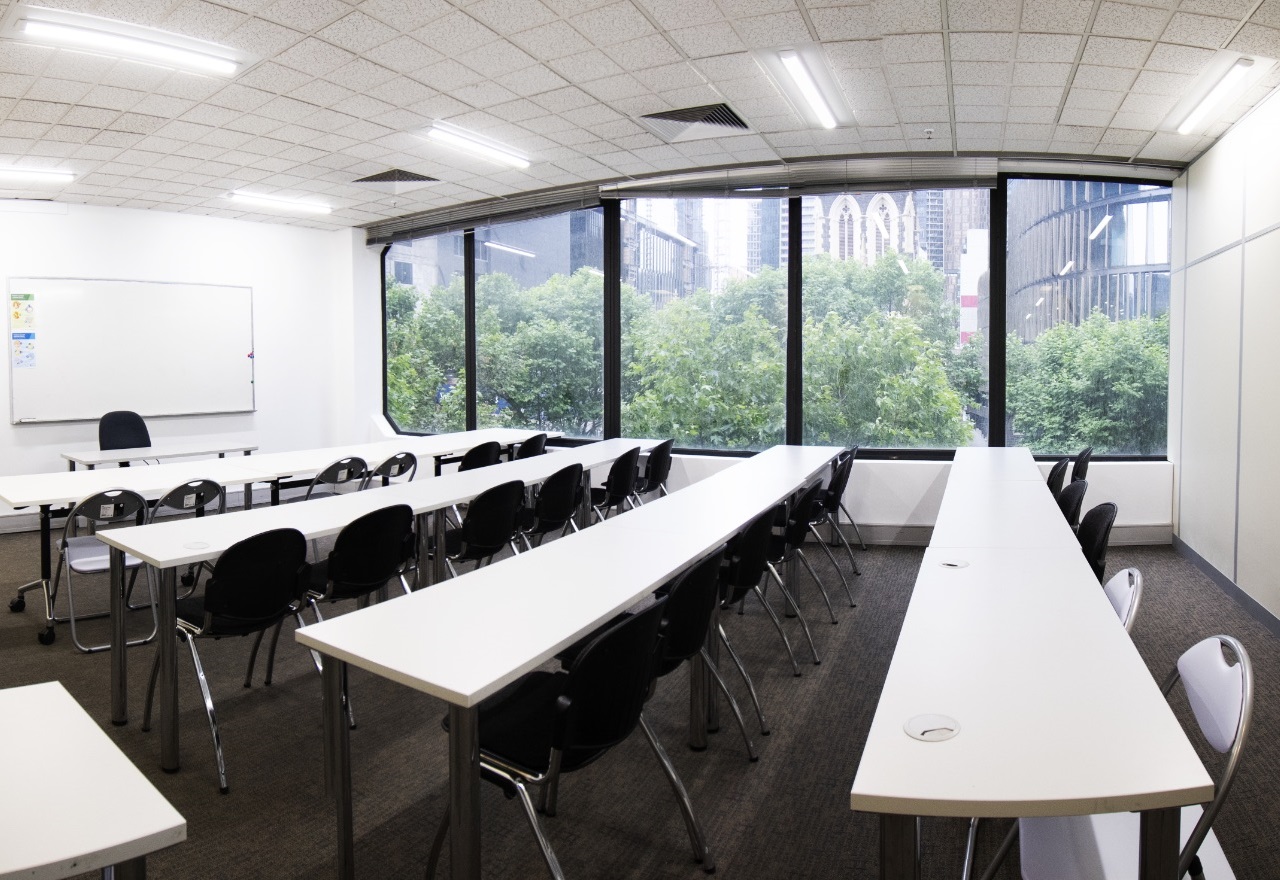
Your classes will be conducted in modern classrooms and you will be able to access Wi-Fi. There are also areas for you to relax, as well as conduct additional study.
You will be provided with a Student Guide relevant to each unit in your course. Recommended textbooks are also available onsite for you to use and borrow if you wish. You may also purchase these textbooks if you require.

Recognition of Prior Learning (RPL)/ Credit Transfer (CT)
Unity Skills College of Hospitality will offer Recognition of Prior Learning (RPL) and Credit Transfer (CT) to all prospective students through the enrolment process. Unity Skills College of Hospitality has documented policies and procedures for these processes and students are provided details of how to apply for RPL or Credit Transfer through the enrolment process. For further details, please refer to RPL and Credit Transfer Policy and Procedure.